A WhatsApp AI assistant is not a novelty chatbot that spits canned replies. It reads a customer's message in plain language — Hindi, English, or the Hinglish most Indian customers actually type — understands the intent, answers from your business information, and knows when to stop and pass the chat to a human. Done well, it deflects the repetitive questions that eat your team's day. Done badly, it frustrates customers into leaving. This is what an AI assistant can genuinely do on WhatsApp, where it beats a rules bot, and where it does not.
Rules bot vs AI assistant: not the same thing
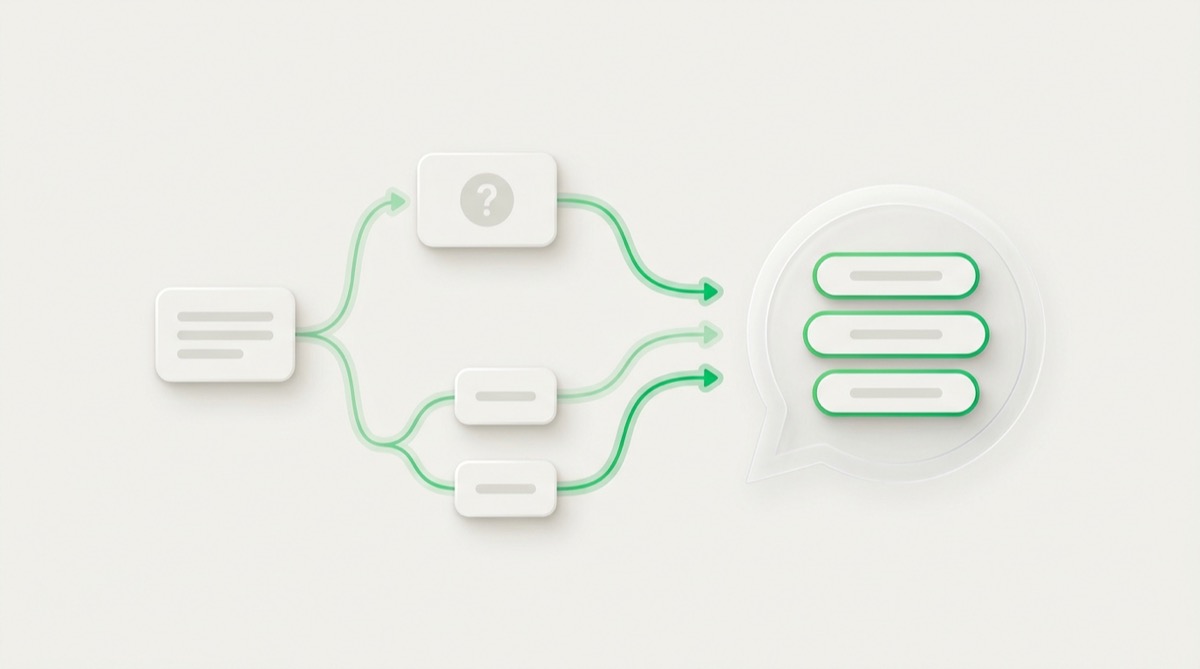
A rules-based bot follows a fixed script: press 1 for orders, press 2 for support. It is fast and predictable, and for a finite set of known questions it is the right tool. An AI assistant is different — it interprets free-text messages it has never seen exactly, and generates an answer grounded in the material you give it. The two are complementary, not rivals: the best WhatsApp setups use rules for the predictable paths and AI for the messy middle. We break down building the rules side in the no-code WhatsApp chatbot guide.
What a WhatsApp AI assistant can actually do
- Answer real questions in natural language. “Do you deliver to Surat 395007 and how long does it take?” gets a correct, specific reply — not a menu.
- Ground answers in your business. Fed your FAQs, catalogue, policies and hours, the assistant answers from that source instead of making things up.
- Handle routine transactions. Track an order, share a payment link, check availability, book a slot — then write the result back to your CRM.
- Work around the clock. It covers nights and weekends, so a 11pm question still gets a useful answer.
- Hand off cleanly. When a chat needs a human — a complaint, a refund, anything sensitive — it routes to an agent with the full history attached.
Where AI should NOT be in charge
Being honest about the limits is what keeps customers happy. Do not let an AI assistant make binding commitments — final pricing, refunds, legal or medical advice, or anything it could get subtly wrong at your cost. The right pattern is: AI handles information and routine actions, humans own decisions and exceptions. A good assistant is measured as much by how gracefully it hands off as by how much it answers.
The India specifics that matter
- Language. Your customers type Hinglish and switch scripts mid-sentence. The assistant has to handle that, not just clean English.
- One WABA, one number. The assistant should run on the same WhatsApp Business number you use for OTPs and campaigns, so customers see one identity — not a separate bot line.
- Template rules. Business-initiated messages still follow Meta's template and category rules; the assistant lives inside the 24-hour customer-service window once a user writes in.
Deploying one without a data-science team
You do not need ML engineers. A no-code setup means: connect your WhatsApp number, paste in your FAQs and policies, set the handoff rules, and test. The assistant improves as you feed it the questions it missed. QuickAuth's AI chatbot is Claude-powered and no-code — it auto-answers customers, handles routine orders, updates your CRM, and hands the rest to your team inbox, all on the same WABA as your OTPs and broadcasts. Want to see it on your own flows? Book a demo.