WhatsApp Business API pricing confuses most people because it does not work the way SMS does. You are not billed per message — you are billed per conversation, and the category of that conversation (utility, authentication, or marketing) decides the rate. Get the model right and the bill is predictable and often far cheaper than SMS. Get it wrong and you overpay on marketing conversations you could have sent as utility. Here is the honest 2026 breakdown for India.
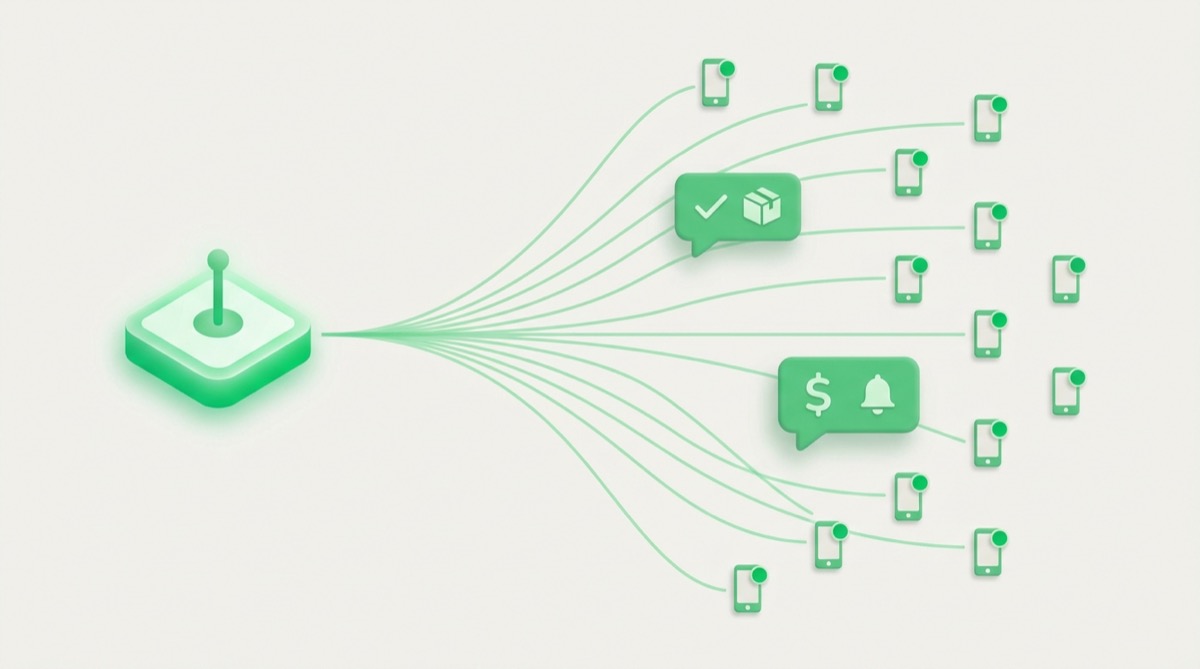
You pay per conversation, not per message
Meta bills in 24-hour conversation windows. Once a conversation opens, every message between you and the customer in that 24-hour window — in both directions — is covered by a single charge. Send five follow-ups within the window and you still pay once. This is the single most important thing to understand, because it rewards resolving a customer in one session rather than pinging them repeatedly.
The category decides the price
Every business-initiated conversation falls into one of three categories, and they are priced very differently in India:
- Utility — order updates, payment receipts, delivery and account notifications. The cheapest category, and the backbone of transactional messaging.
- Authentication — OTPs and login codes. Priced low for India; often cheaper than an SMS OTP, which is why WhatsApp OTP undercuts SMS.
- Marketing — promotions, offers, re-engagement. The most expensive category, and the one to use deliberately.
Meta periodically updates the exact per-conversation rates and has been shifting authentication and utility pricing in India, so always confirm current numbers against Meta's official rate card. The structure above, however, is stable: utility and auth are cheap, marketing is not.
Service conversations: the free lane
When a customer messages you first, that opens a service conversation — and Meta gives every business a monthly allowance of free service conversations. If a big share of your volume is customers writing in for support, an AI assistant and a team inbox answering inside that window can carry a lot of traffic at no per-conversation cost.
What a BSP adds on top
You pay Meta's conversation charge plus your Business Solution Provider's platform fee. BSPs differ a lot here — some add per-message markups, some charge flat platform fees, some bundle delivery tooling. In India the things that actually move your total bill are:
- INR billing vs USD. USD-billed providers expose you to forex swings and card fees; INR billing is simpler to reconcile.
- Delivery rate. A cheap per-message rate is meaningless if 55% never arrive — you paid for conversations that did nothing. Real delivery is the number that matters.
- Category routing. A good platform routes eligible messages on the utility lane instead of defaulting to marketing, which directly lowers cost.
How to cut your WhatsApp bill
- Route everything you legitimately can as utility, not marketing.
- Resolve customers within the 24-hour window so you pay one conversation, not several.
- Lean on free service conversations with an AI assistant for inbound support.
- Protect your delivery rate — undelivered conversations are pure waste.
Where QuickAuth fits
QuickAuth is INR-billed and utility-category by design, so you are not quietly overpaying on marketing conversations or forex. Auth, utility, broadcast, AI chatbot and team inbox run on one WABA and one invoice. Pricing is quoted to your volume rather than a public list — tell us your monthly volumes and we will map it out. Curious what you are losing today? Get a free delivery audit.